
20 Colombian Spanish words and expressions you’ll hear every day
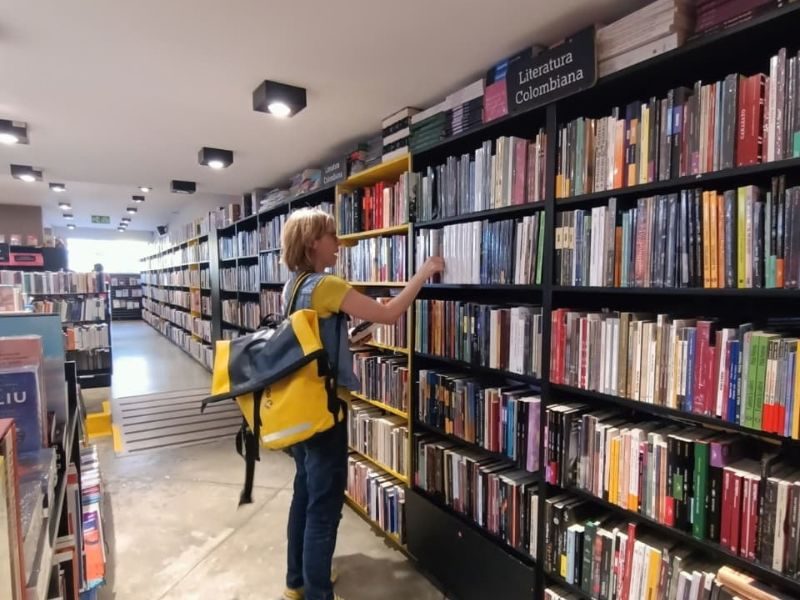
You may understand Spanish well and still hear expressions in Bogotá that catch you by surprise.
Why does someone order a coffee by saying “¿Me regala un café?”? Why can “de pronto” mean “maybe”? And why do you hear “a la orden” so often in stores and cafés?
These are part of everyday Spanish in Bogotá. Once you start recognizing them, conversations become easier to follow.
Here are 20 words and expressions you’re likely to hear while studying, shopping, getting around the city or talking with Colombians.
Colombian Spanish expressions at a glance
| Colombian Spanish | Meaning | Where you might hear it |
|---|---|---|
| Qué pena / Qué pena con usted | Sorry / Excuse me | Everyday conversations |
| ¿Me regala…? | Can I have…? | Cafés, restaurants and stores |
| A la orden | How can I help? / You’re welcome | Stores and restaurants |
| ¿Le colaboro? / ¿Me colabora? | Can I help you? / Can you help me? | Stores and everyday conversations |
| Hágale | Go ahead / Let’s do it | Making plans |
| De una | Definitely / Right away | Making plans |
| De pronto | Maybe / Perhaps | Everyday conversations |
| Me toca… | I have to… / It’s my turn | Work, plans and daily life |
| Juicioso / juiciosa | Responsible / Well-behaved | Home, school and work |
| Trancón | Traffic jam / Heavy traffic | Getting around Bogotá |
| Ahorita | Now / In a little while | Everyday conversations |
| Me avisa | Let me know | Plans and getting around |
| Buenas | Hi / Hello | Stores, cafés and restaurants |
| ¿Me hace un favor? | Could you do me a favor? | Polite requests |
| Un momentico | Just a moment | Everyday conversations |
| Plata | Money | Everyday conversations |
| Siga / Siga no más | Come in / Go ahead | Homes, stores and offices |
| Que esté muy bien | Have a good day / Take care | Stores, cafés and offices |
| Sí, señor / Sí, señora | Yes, sir / Yes, ma’am | Polite conversations |
| Un ratico | A little while | Everyday conversations |
Everyday expressions you’ll hear in Bogotá
1. Qué pena / Qué pena con usted
Meaning: Sorry / Excuse me
In Bogotá, qué pena is a common way to apologize or politely get someone’s attention.
Example:
Qué pena, ¿me puede decir dónde queda la estación?
“Excuse me, can you tell me where the station is?”
Good to know: Qué pena doesn’t always mean someone feels embarrassed. In Colombia, you’ll often hear it as “sorry” or “excuse me.”
2. ¿Me regala…?
Meaning: Can I have…?
You’ll hear this when people order food, drinks or other things.
Example:
¿Me regala un café, por favor?
“Can I have a coffee, please?”
Good to know: They’re not asking for a free coffee. In Colombia, ¿me regala…? is a polite way to order or ask for something.
3. A la orden
Meaning: How can I help? / You’re welcome
You’ll often hear a la orden in stores, restaurants and other businesses.
Someone may say it when you enter:
Buenas, a la orden.
Or after you say thank you:
Muchas gracias.
A la orden.
Good to know: There’s no single English translation. Its meaning changes with the situation, from offering help to responding to “thank you.”
4. ¿Le colaboro? / ¿Me colabora?
Meaning: Can I help you? / Can you help me?
In Colombia, colaborar is often used when offering or asking for help.
A store employee might ask:
¿Le colaboro?
“Can I help you?”
Or someone might ask:
¿Me colabora con esta dirección?
“Can you help me with this address?”
This use of colaborar can sound unusual if you learned it as “to collaborate.”
5. Hágale
Meaning: Go ahead / Let’s do it
Hágale can show agreement, permission or encouragement.
Example:
¿Vamos a comer algo?
Hágale.
“Let’s do it.”
Or:
¿Empiezo?
Hágale.
“Go ahead.”
6. De una
Meaning: Definitely / Right away
De una is a common way to agree with a plan.
Example:
¿Vamos por un café después de clase?
¡De una!
“Definitely!”
It can also mean doing something right away:
Hagámoslo de una.
“Let’s do it right away.”
7. De pronto
Meaning: Maybe / Perhaps
You may have learned de pronto as “suddenly.”
Example:
¿Vas a salir esta noche?
De pronto.
“Maybe.”
Good to know: In Colombia, de pronto often means “maybe” or “perhaps,” not “suddenly.”
8. Me toca…
Meaning: I have to… / It’s my turn
Me toca is often used when you have to do something.
Example:
Me toca trabajar mañana.
“I have to work tomorrow.”
It can also mean that it’s your turn:
Ahora me toca a mí.
“Now it’s my turn.”
9. Juicioso / juiciosa
Meaning: Responsible / Well-behaved / Diligent
Juicioso can describe someone who is behaving well, studying, working or doing what they’re supposed to do.
Example:
Estudia juicioso.
“Study hard.”
You may also hear:
Pórtate juicioso.
“Behave yourself.”
The exact meaning depends on the situation.
Words you’ll hear while getting around Bogotá
10. Trancón
Meaning: Traffic jam / Heavy traffic
This is a useful word to know in Bogotá.
Example:
Llegué tarde por el trancón.
“I was late because of the traffic.”
You may also hear:
Hay mucho trancón.
“There’s a lot of traffic.”
11. Ahorita
Meaning: Now / In a little while
Example:
Lo hago ahorita.
This could mean:
“I’ll do it now.”
Or:
“I’ll do it in a little while.”
The context will help you understand when.
Good to know: Ahorita doesn’t always mean “right now.” The exact timing depends on the situation.
12. Me avisa
Meaning: Let me know
You’ll hear me avisa in many everyday situations.
Example:
Me avisa cuando llegue.
“Let me know when you arrive.”
Or:
Me avisa dónde se quiere bajar.
“Let me know where you want to get out.”
Polite expressions you’ll hear in Bogotá
13. Buenas
Meaning: Hi / Hello
You won’t always hear hola when you enter a store, café or restaurant.
People often simply say:
Buenas.
It’s a short, everyday greeting.
14. ¿Me hace un favor?
Meaning: Could you do me a favor?
This expression is often used before asking for something.
Example:
¿Me hace un favor? ¿Me trae la cuenta?
“Could you bring me the bill?”
It makes the request sound more polite.
15. Un momentico
Meaning: Just a moment
Momentico is a common diminutive of momento.
Example:
Espéreme un momentico.
“Wait for me for just a moment.”
The diminutive can make the request sound softer and friendlier.
16. Plata
Meaning: Money
You can say dinero, but you’ll hear plata often in everyday conversations.
Example:
No tengo plata.
“I don’t have any money.”
Or:
¿Cuánta plata necesitas?
“How much money do you need?”
17. Siga / Siga no más
Meaning: Come in / Go ahead
If someone opens a door and says siga, they’re inviting you to enter.
Example:
Siga, por favor.
“Come in, please.”
You may also hear:
Siga no más.
“Go right ahead.”
18. Que esté muy bien
Meaning: Have a good day / Take care
This is a polite way to end a conversation or interaction.
Example:
Muchas gracias. Que esté muy bien.
“Thank you. Have a good day.”
You’ll hear it in stores, cafés, offices and many other places.
19. Sí, señor / Sí, señora
Meaning: Yes, sir / Yes, ma’am
In Colombia, señor and señora are common in polite everyday conversations.
Example:
¿Necesita una bolsa?
Sí, señora. Gracias.
“Yes, ma’am. Thank you.”
It doesn’t always make the conversation very formal. It can simply be a polite way to respond.
20. Un ratico
Meaning: A little while
Ratico is a diminutive of rato.
Example:
Voy a descansar un ratico.
“I’m going to rest for a little while.”
Or:
Hablemos un ratico.
“Let’s talk for a little while.”
It means a short period of time, not an exact number of minutes.
Colombian Spanish varies by region
Some of these words are used across Colombia, while others are more common in Bogotá.
In cities like Medellín, Cali and Cartagena, you may hear different words and expressions. Accents and pronunciation can also change from one region to another.
There isn’t just one way to speak Colombian Spanish. Every region of Colombia sounds a little different, and the Spanish you hear in Bogotá is one of the many ways people speak across the country.
Start by understanding these expressions
You don’t need to start using these expressions as soon as you arrive in Bogotá. Understanding them is more useful at first.
Once you recognize expressions like qué pena, de pronto or me avisa, everyday conversations become easier to follow. With time, you’ll also learn when it feels natural to use them yourself.
Learn Colombian Spanish in real situations
Knowing what an expression means is only the first step. You also need to hear how people use it.
You might hear ¿me regala…? while ordering at a café, de una when someone agrees to a plan, or trancón when people talk about traffic.
This is one of the advantages of learning Spanish in Bogotá. You can practice in class and then hear Spanish again while ordering lunch, shopping, taking a taxi or exploring the city.
At Learn More Than Spanish, we connect Spanish classes with everyday life in Bogotá, so students can practice what they learn in real situations.
Colombian Spanish: frequently asked questions
What are some common Colombian Spanish expressions?
Common expressions you may hear in Colombia include qué pena, a la orden, ¿me regala…?, hágale, de una, de pronto, me toca and juicioso. Which ones you hear most often can depend on the region and the situation.
Are Colombian Spanish expressions the same as Colombian slang?
No. Colombian slang is informal language, but many everyday Colombian expressions are not slang. Phrases such as ¿me regala…?, a la orden and qué pena are common in polite, everyday conversations.
Are these expressions only used in Colombia?
No. Some are also used in other Spanish-speaking countries. What can change in Colombia is how often people use them or what they mean in a particular situation.
Do I need to learn Colombian slang before visiting Bogotá?
No. You can communicate in Bogotá without learning Colombian slang. Understanding common everyday expressions can be more useful because you’ll hear them while ordering food, shopping, getting around the city and talking with people.
Practice Colombian Spanish in Bogotá
The best way to understand expressions like these is to hear them in real conversations.
At Learn More Than Spanish, our Spanish classes in Bogotá combine personalized lessons with opportunities to use Spanish in everyday life.
Want to see what a class is like? Book a trial class and start practicing Spanish in Bogotá.


