Greetings in Spanish: the standard and the colombian way
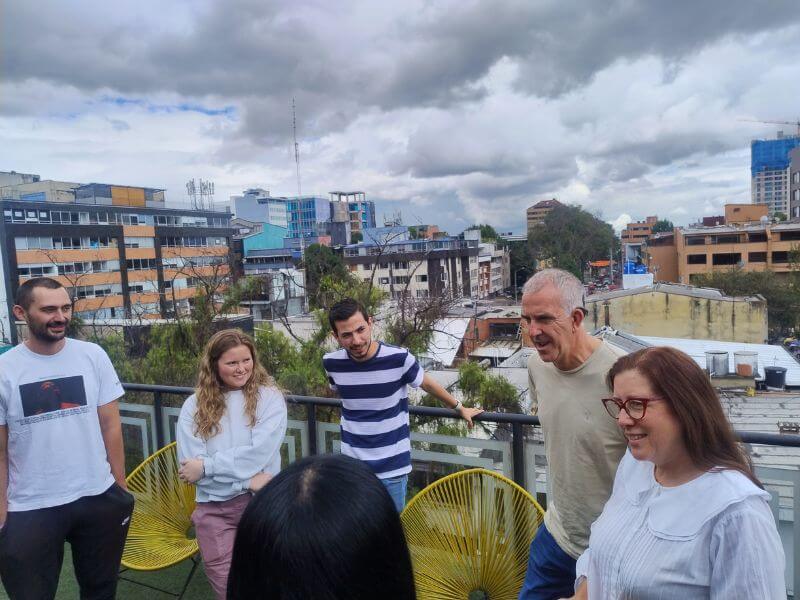
Every week, we welcome new students to our Spanish school in Bogotá.
Many arrive feeling nervous, but excited to start learning Colombian Spanish. Almost all of them tell us the same thing on the first day:
“I know how to say hola, buenos días, and ¿cómo estás?, but that’s about it.”
We always smile, because we know what will happen next.
The moment they walk around Bogotá, they discover something different. Colombians don’t only say hola. They say:
“¿Qué más?”
“¿Cómo vas?”
“¿Todo bien?”
“¿Qué cuentas?”
“¡Quiubo!”
And suddenly, our students realize that learning greetings is not just about vocabulary, it’s about understanding how people speak, connect, and show friendliness here.
What do you say when you just meet someone in the morning, afternoon or night?
Well, this is the standard way, used often in Colombia and Latin America
If you are familiar with that person you could simply say “Buenos días” or “Hola” followed by a question about how they are:
| Question | Answer | |
|---|---|---|
| Morning | Buenos días. ¿Cómo estás? Good morning. How are you? | Bien, gracias y ¿tú? Good, thank you and you? |
| Afternoon | Buenas tardes. ¿Cómo estás? Good afternoon. How are you? | Bien, gracias y ¿tú? Good, thank you and you?/td> |
| Night | Buenas noches. ¿Cómo estás? Good evening. How are you? | Bien, gracias y ¿tú? Good, thank you and you? |
| Morning / afternoon/ Night | Hola. ¿Cómo estás? Hi. How are you? | Bien, gracias y ¿tú? Good, thank you and you? |
If you are in a formal situation, you simply say “Buenos días”, “Buenas tardes” or “Buenas noches” and the answer will be also “Buenos días”, “Buenas tardes” or “Buenas noches”, respectively.
And now.. the Colombian way! Mostly used between friends (not the boss!)
¡Buenas!
“Buenas” is probably the most common way of greeting someone in Colombia. It is short for “Buenas tardes” or “Buenas Noches” but you can also use it in the morning.
¡Qué hubo!
“Qué hubo” is pronounce like ¡Quiubo! (sounds like “kiu-bo”) and means What’s been going on?
¿Qué más?
“¿Qué más?” literally means, “What else?” but we use it to say “Hey! How are you?
¿Qué cuentas?
“¿Qué cuentas?” literally means “What do you have to tell?” but we use it to simply ask, “What’s been going on?”
How we practice greetings in class
We don’t just explain them.
We practice them through:
- role-play
- real conversations
- neighborhood walks
- dialogues inspired by daily life in Bogotá
- visits to local cafés and markets
Our goal is simple: help students use Spanish the way Colombians speak it every day.
And it works. Students start greeting their classmates, teachers, and even strangers on the street. It becomes natural.
Your first step to learning Colombian Spanish
If you want to learn Colombian Spanish, start with the greetings. They are simple, friendly, and the fastest way to connect with people.
At our school, we teach you these expressions from day one so you can enjoy every moment of your stay in Bogotá, not just inside the classroom, but in the real world.
Want to learn with us? Join our Spanish classes in Bogota or online and start using real Colombian greetings from day one.